

A cyber attack refers to malicious activities targeting devices (such as PCs, smartphones) and IT infrastructure (such as servers) with the purpose of unauthorized access, data leakage, service disruption, or other damage. With the proliferation of Internet services and the expansion of digitalization, both individuals and businesses face increasingly serious risks from cyber attacks. In Indonesia, for example, organisations reported tens of thousands of incidents and massive DDoS events in recent years. SoC Radar In this article we explain: (1) the background and motives of cyber attacks, and (2) seven representative types of attacks along with their characteristics, examples, and countermeasures.
1. Why Do Cyber Attacks Occur?

Cyber attacks occur due to multiple underlying factors, including:
- The spread of the Internet and connected devices, increasing attack surfaces.
- Businesses, public institutions and individuals depending on digital services and data.
- Weak or insufficient security measures in infrastructure, systems, or human behaviour.
Typical motives can be categorised into three:
- Monetary gain: Cybercrime for profit—exfiltration of data, ransomware, theft of funds.
- Political / military objectives: Espionage, sabotage, ideological attacks.
- Expression, reputation, or disruption: Attacks for challenge, publicity, or simply causing trouble.
In Indonesia, for instance, the high frequency of cyberattacks (3 300+ attacks per week reported in mid-2023) underlines the extent of the risk. IndoSec+1 By understanding the why, organisations can design more effective defensive strategies.
2. Seven Representative Types of Cyber Attacks

Here are seven common types of cyber attack, what they target, and how they work:
- Malware (Malicious Software) Programs designed to damage, steal, or disable devices and systems (e.g., viruses, worms, trojans, ransomware). Example: In 2024 Indonesia, a major ransomware variant (LockBit 3.0) attacked government data centres, crippling services. Source:Reuters
- Phishing Fraudulent communications (email, SMS, social media) that trick individuals into revealing sensitive credentials or clicking malicious links. Example: A spike in phishing against Indonesian digital services and financial institutions.Source: SoC Radar
- Ransomware Malware that encrypts data or locks systems and demands a ransom for restoration. Example: In June 2024, more than 40 Indonesian government agencies were hit by ransomware demanding US$8 million. Source:Reuters
- Bot Attacks / Automated Attacks Use of automated tools (“bots”) to carry out large-scale attacks such as DDoS, credential stuffing, brute-force login attempts. Example: Indonesia reported thousands of DDoS events using multi-vector attacks.Source: SoC Radar
- List-based / Credential-Stuffing Attacks Attackers use leaked credential lists to attempt logins on multiple services, exploiting reuse of usernames/passwords. Example: An issue in Indonesia given large volumes of account leaks and social-engineering attacks.
- Brute-Force Attacks Repeatedly attempting all possible passwords or keys until access is gained; often used against weak configurations or default credentials.
- Social Engineering Manipulating people rather than technical systems – e.g., impersonation, fake support calls, malicious insiders.
3. Why Understanding These Attack Types Matters
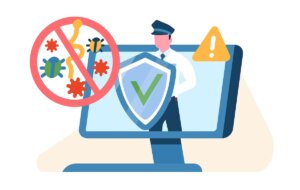 Knowing which attack types you may face allows you to set up the right defences:
- If malware/ransomware risk is high → implement endpoint protection, backups, system-hardening.
- If phishing or social engineering is common → invest in employee training, simulated attacks, stronger identity verification.
- For bot-/credential-based attacks → enforce multi-factor authentication (MFA), rate-limit login attempts, monitor unusual behaviour. Because cyber threats evolve rapidly, a “one size fits all” security model is insufficient; a layered, adaptive approach is required.
4. Who is At Risk?
Virtually all organisations and individuals are at risk, but the following are especially vulnerable:
- Small and medium-sized enterprises (SMEs): Limited budgets or security resources make them targets.
- Public institutions or critical infrastructure: Attacks on Indonesian government agencies highlight this.
- Businesses with high-value data: E-commerce, financial services, healthcare, etc.
- Users with weak security practices: Single factor login, reused passwords, no backup, etc.
Summary
 We have covered:
- What a cyber attack is, and why they happen.
- Seven key types of attack with examples relevant to Indonesia.
- Why understanding them enables better defence.
- Who is particularly at risk.
With increasing digitalisation in Indonesia and the rise of sophisticated threats, organisations must shift from reactive to proactive security stances. We recommend reviewing your current security posture, implementing layered defences, and staying informed of threat trends.